
Blog archive
Browse below or search for a symptom or disease
All information presented on this website is for informational purposes only and does not replace the proper evaluation of a healthcare professional.
-

Benign paroxysmal positional Vertigo (BPPV): symptoms, causes, diagnosis and treatment
Commonly known as “crystal dizziness,” Benign Paroxysmal Positional Vertigo (BPPV) is one of the most frequent diagnoses in ENT (ear, nose and throat) clinics. Its most typical symptom is vertigo, which appears in brief episodes triggered by head movements such as bending down, lying down, or getting up. BPPV is one of the leading causes
-

9 myths about labyrinthitis and dizziness explained clearly
Are dizziness and labyrinthitis the same? Is it normal in old age? Can it cause hearing loss? Can it be fatal? Understand what’s truth and myth! Labyrinthitis is far more famous than it is common—and this happens mostly due to confusion and misinformation. Online content and media coverage often mix concepts, which leads to myths
-

Chiari malformation: symptoms, causes, diagnosis and treatment explained
A Chiari Malformation is a congenital condition that can present in various forms and levels of severity, often causing symptoms such as dizziness, vertigo, imbalance, pain, and difficulty swallowing. Treatment must be personalized and based on precise imaging results. Chiari Malformation, previously known as Arnold–Chiari Syndrome or simply Chiari Syndrome, is an uncommon neurological condition
-

Antidepressants that may cause tinnitus: what you need to know
Tinnitus can appear as a side effect of certain medications, including antidepressants. However, this is a rare and usually temporary event. Any change or discontinuation of medication should always be done under medical supervision. Tinnitus, also known as “ear ringing,” is the perception of a sound with no corresponding external source. The noise can vary
-

Ringing in the ears after a concert: what it means and how to treat it
After loud events like concerts, clubs, and festivals, it’s very common to experience ringing in the ears — a generally temporary symptom caused by damage to the sensory cells of the inner ear due to intense sound exposure. For most people, the ringing fades within a few hours, but in some cases, it can become
-
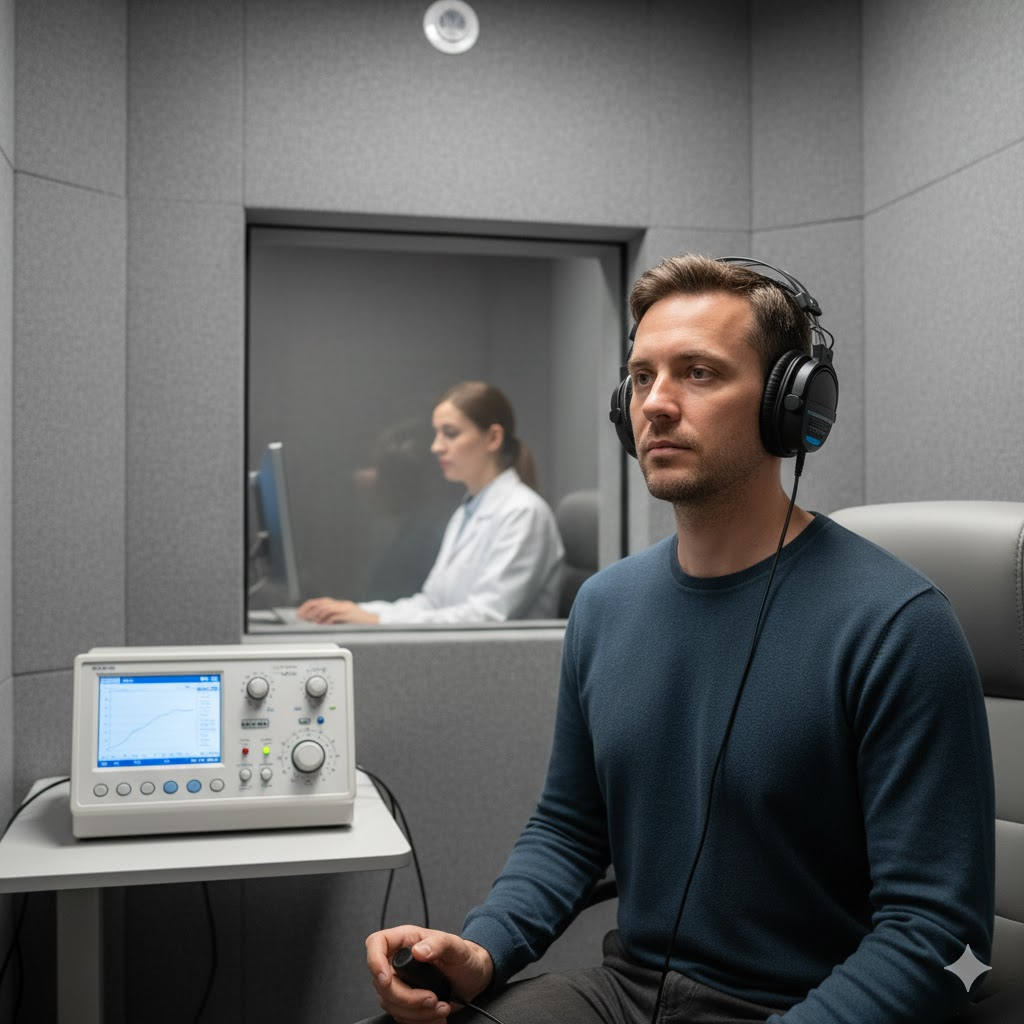
Tests for labyrinthitis: what test should I take for dizziness?
There is no specific test capable of diagnosing labyrinthitis — or any other cause of dizziness — on its own. Exams are just part of the diagnostic process, which also depends on medical evaluation and, most importantly, the patient’s own report. It’s not uncommon for people with vestibular disorders to have completely normal test results.
-

Cybersickness: the link between technology, dizziness and nausea
Excessive use of smartphones, computers, and virtual reality devices has been associated with symptoms like dizziness and nausea — mainly caused by screen light and motion. These symptoms, known as cybersickness, can persist even after using these technologies and may also help reveal pre-existing conditions such as vestibular migraine. Have you ever stopped to think
-

Vestibular migraine and diet: how food influences the symptoms
The influence of diet on vestibular migraine is linked to the body’s overall metabolism and biochemical processes that can trigger or modulate episodes. Adopting a healthy lifestyle can reduce both the severity and frequency of attacks. Recognized as a complex neurological condition affecting millions worldwide, vestibular migraine is mainly characterized by recurrent headaches that may
-
Facts and myths about tinnitus: what’s true?
Does tinnitus have a cure? Will tinnitus lead to deafness? Is it always a sign of hearing loss? Can Ginkgo biloba treat tinnitus? Find the answers to these and other common questions — and learn what’s fact and what’s myth when it comes to ringing in the ears. Tinnitus is a common, yet poorly understood
-

10 facts and myths about dizziness: what’s true and what’s not?
Is dizziness the same as “labyrinthitis”? Can dizziness be emotional? Is dizziness normal in older adults? Can it be a sign of serious disease? Is it always temporary? Can people with dizziness drive safely? These are extremely common questions — and the answers are not always what people expect. Because dizziness is such a common