
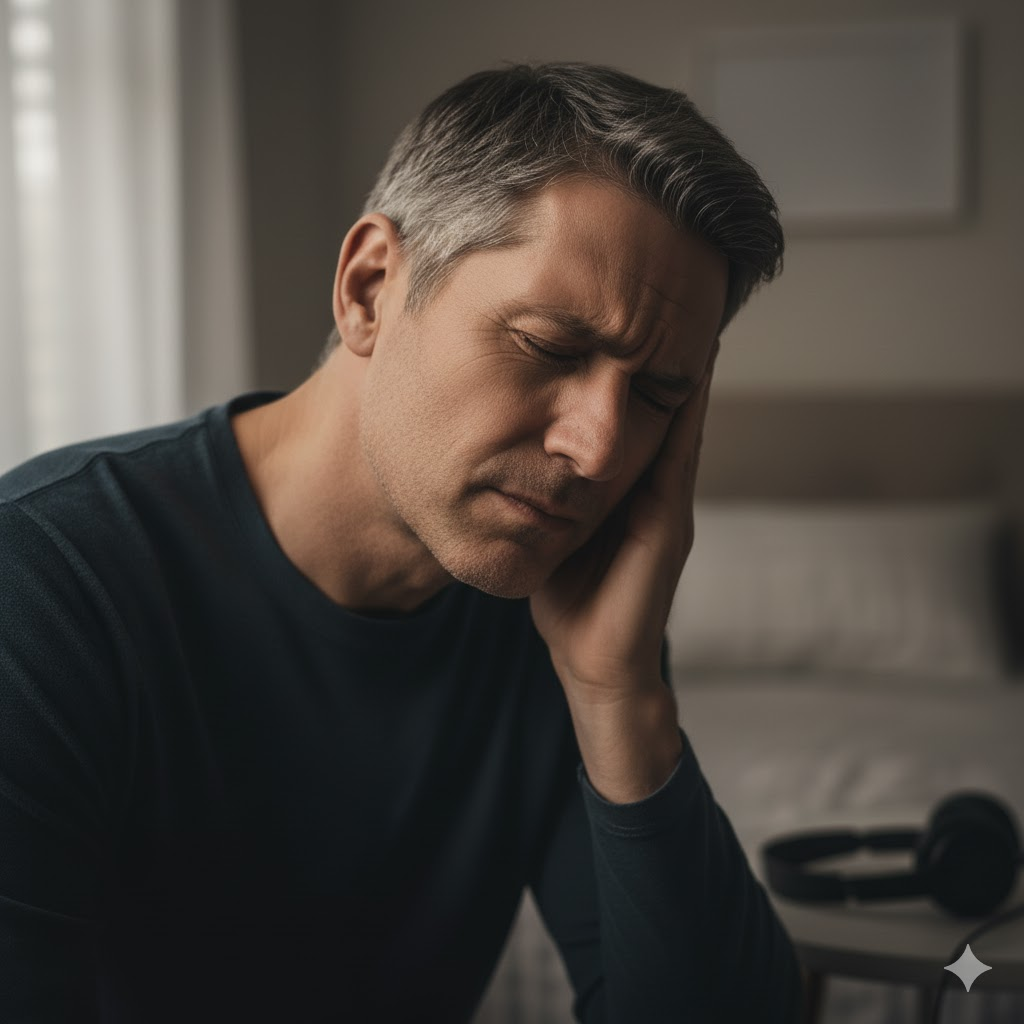
Tinnitus can affect one or both ears, and its intensity may be the same or different on each side. When it occurs in only one ear, healthcare professionals investigate infections, chronic conditions where this pattern is common, as well as hearing loss, which can happen unevenly between ears.
Tinnitus is the perception of sound without any external source. It may present in many forms — from a soft noise to a more intense and distressing sound — and can affect one ear or both.
It is common to find supposed “miracle cures” that promise quick and effective results. However, these solutions lack scientific evidence and may even worsen the condition or cause additional problems.
The best approach is always to seek medical evaluation to identify the underlying causes and set up a safe and effective treatment plan tailored to each patient’s needs.
Want to understand the difference between unilateral and bilateral tinnitus? Let’s dive in!
- What causes tinnitus in the left or right ear?
- What does your tinnitus sound like?
- Are there other symptoms involved?
- How to treat tinnitus?
What causes tinnitus in the left or right ear?
As mentioned earlier, tinnitus is the perception of sound without an external source, and it may manifest in one ear (unilateral) or both (bilateral).
Even when a patient reports tinnitus only in the left or right ear, a proper assessment is essential. Often the sound is actually present in both ears, but louder on one side, making it noticeable only there.
In general, tinnitus may be caused by a variety of factors, such as:
- hearing loss (caused by ear conditions, ototoxic substances, or loud noise exposure);
- muscular or joint dysfunctions (such as Temporomandibular Disorder — TMD);
- tumors (in auditory pathways or brain structures);
- metabolic changes (like hypothyroidism or diabetes);
- medications.
Unilateral tinnitus isn’t always serious, but its underlying causes must be investigated. Some chronic conditions — including Ménière’s disease — may affect just one ear or affect one side more severely.
Tinnitus characteristics and intensity may vary greatly from one person to another.
What does your tinnitus sound like?
Tinnitus may be perceived in one or both ears — though many patients describe it as a sound inside their head — and its frequency may vary (continuous or intermittent). The loudness may remain stable or fluctuate over time.
In some cases, tinnitus may sound like a pulsing noise. Most commonly, it resembles a ringing, buzzing, hissing, flowing water, engine noise, or pressure cooker steam — among many other descriptions.
The more detailed the patient’s description, the easier it is to identify potential causes and related factors contributing to the symptom.
Are there other symptoms involved?
It’s common for tinnitus to be accompanied by additional symptoms, which provide important clues for diagnosis and treatment planning.
Symptoms that warrant attention include:
- hearing difficulties;
- feeling of ear fullness;
- headache;
- dizziness;
- fever;
- ear pain or discharge.
Tinnitus can also trigger or worsen emotional conditions such as anxiety and stress, as well as sleep disturbances like insomnia.
A very common condition in tinnitus patients is hyperacusis, which is an intolerance to moderate sounds — noises that are otherwise well tolerated by most people.
How to treat tinnitus?
It is important to understand that complete remission is not always possible, especially when hearing loss is involved. However, effective strategies exist to help manage tinnitus and improve quality of life.
The first — and most essential — step is to consult an otolaryngologist, preferably a neurotologist, the specialist best prepared to diagnose and treat tinnitus-related disorders.
During evaluations, we perform a full examination to identify underlying causes and request complementary tests when needed. From there, we build a personalized, often multidisciplinary treatment plan.
Treatment options may include:
- sound therapy (especially useful when insomnia is involved);
- hearing aids (when hearing loss is present);
- medication;
- physical therapy;
- in rarer cases, surgical procedures.
Therapeutic and psychiatric support may also be involved to help patients cope with stress and anxiety triggered or worsened by tinnitus.
Medications may be used to treat conditions related to tinnitus, such as anxiety or sleep issues — but there is no single specific drug that cures tinnitus.
If you suffer from tinnitus in one or both ears, never self-medicate, even with “natural” products. They may be ineffective or even harmful.