
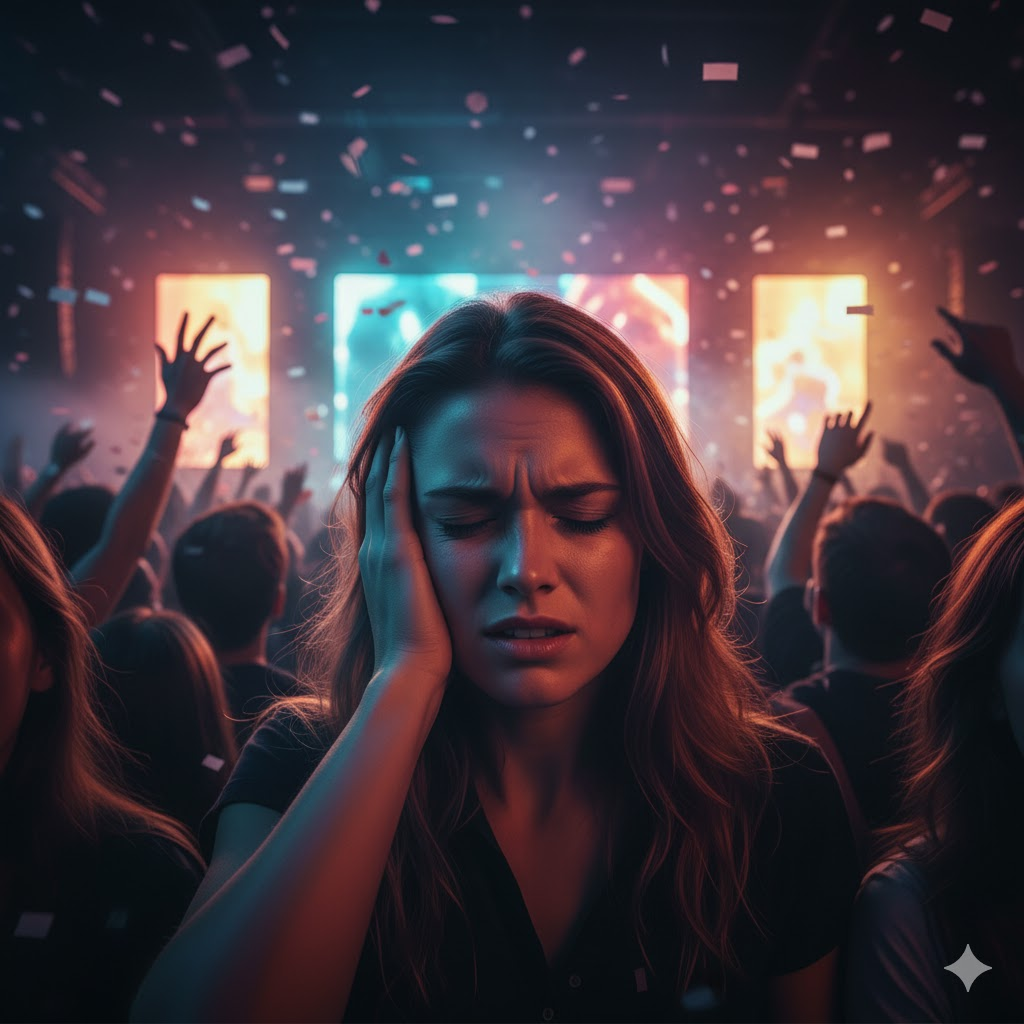
After loud events like concerts, clubs, and festivals, it’s very common to experience ringing in the ears — a generally temporary symptom caused by damage to the sensory cells of the inner ear due to intense sound exposure. For most people, the ringing fades within a few hours, but in some cases, it can become permanent.
After a party or concert — usually with extremely loud music — many people notice persistent ringing. But why does this happen?
In noisy environments, or when using earphones at high volume for long periods, sound pressure can exceed the ear’s safe limits, stressing and injuring the inner ear cells.
Most of the time, this is temporary and the ear recovers naturally. However, it’s important to understand what is behind the ringing and how to respond — especially if the symptom lasts longer than expected, which may indicate more significant hearing damage.
In this article, I’ll explain why this ringing occurs, what to do when it happens, and how to protect yourself in the future. Keep reading!
- Is ringing in the ears normal after concerts or parties?
- What exactly is tinnitus?
- How to stop tinnitus after a show?
- What if the ringing doesn’t go away?
Is ringing in the ears normal after concerts or parties?
Yes, it’s normal to experience ringing in the ears after loud events — and the same goes for people who spend long periods listening to loud music through headphones.
As mentioned earlier, tinnitus occurs because the sensory cells in the ear are injured during noise exposure.
In most cases, the symptom is temporary because the cells can recover. However, depending on the severity of the injury or the individual’s sensitivity, damage may become permanent.
If the ringing continues — especially when combined with hearing loss or a feeling of clogged ears — seeing an ENT doctor or neurotologist (specialist in tinnitus) is essential.
What exactly is tinnitus?
Tinnitus is a perception of sound without an external source, triggered by various conditions involving hearing function and the brain’s sound processing pathways.
Although causes differ from person to person, many vestibular disorders may involve tinnitus, dizziness, and vertigo together.
Tinnitus may also result from:
- neurological disorders;
- vascular changes near the ear;
- temporomandibular joint dysfunction (TMJ);
- stress, anxiety, and depression;
- and especially hearing loss — the most common cause of persistent tinnitus.
How to stop tinnitus after a show?
The best thing to do when experiencing ringing after a loud event is auditory rest — avoid noisy environments and loud sounds to allow the inner ear to fully recover.
Recovery time varies and may take days. In cases of acoustic trauma, corticosteroids may help, but there is no medication proven to instantly eliminate tinnitus. Some drugs, like aspirin, may even worsen it.
So for now… silence is the best medicine.
What if the ringing doesn’t go away?
If tinnitus persists despite proper auditory rest, medical evaluation is necessary.
Whether tinnitus becomes permanent depends on multiple factors:
- intensity and duration of noise exposure;
- pre-existing hearing issues;
- individual susceptibility — some people are more vulnerable to auditory damage.
Even if tinnitus becomes chronic, there are numerous treatment options to improve quality of life and productivity. The first and most important step is consulting a specialist to determine the cause and adopt the best management approach for your specific case.