
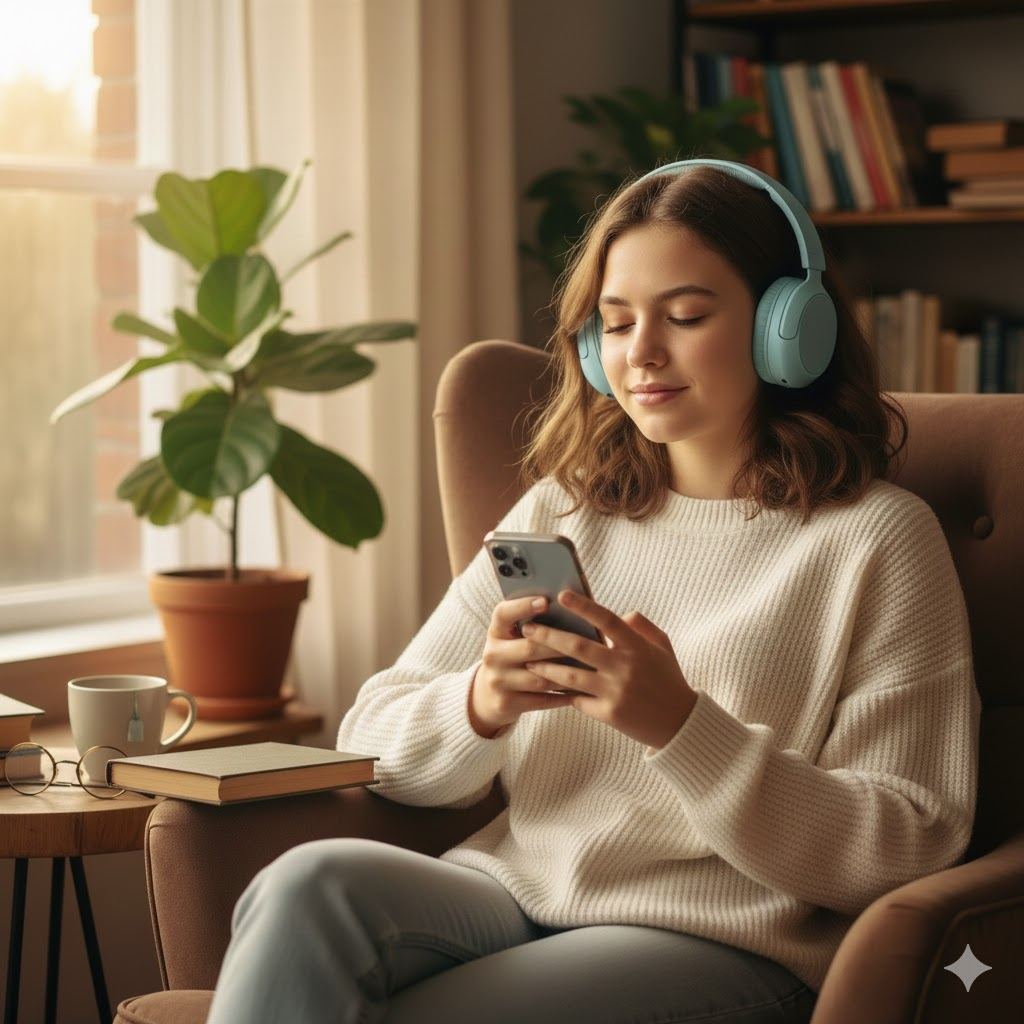
Headphones are extremely popular, but using them indiscriminately can lead to varying degrees of hearing loss. Learn how to protect your hearing and transform the way you use your headphones by adjusting a few simple habits.
Using headphones is not prohibited, but it is important to take precautions—especially regarding how often and how long we use these devices.
The issue is that headphones can be a significant risk factor for hearing loss when used excessively and at very high volumes.
In this article, I bring key clarifications on the subject and practical tips to help you use headphones in a healthier way. Check it out!
- What are the risks of using headphones?
- What is the best type of headphone for hearing health?
- How can you use headphones safely? 4 tips
- What signs of hearing loss deserve attention?
What are the risks of using headphones?
The main problem with headphones is also their most attractive advantage: they deliver sound directly into the ear canal.
Regardless of the model, the sound source sits very close to important auditory structures, such as the eardrum and cochlea, which makes the sound impact stronger and increases the risk of acute or gradual injuries associated with hearing loss.
Hearing loss can be caused by several factors, ranging from aging to infections, as well as constant exposure to loud noise—such as indiscriminate headphone use.
What is the best type of headphone for hearing health?
When it comes to headphones, you should always be cautious, especially because some models may pose higher risks to your hearing than others.
In general, over-ear headphones (which cover the entire ear) provide better isolation from ambient noise compared to in-ear models (inserted into the ear canal). This reduces the need to increase the volume to overcome surrounding sounds, making them a healthier option. Some over-ear models also feature active noise cancellation, which reduces competition between the device and the environment and allows the user to keep the volume at safer levels.
For use in quiet environments, bone-conduction headphones are another interesting option. They transmit sound through vibrations in the bones near the ear, without sending sound directly through the ear canal, which significantly reduces pressure on the eardrum.
It is also important to choose models that are ergonomic and comfortable—firm enough to stay in place but not too tight, avoiding headaches, jaw discomfort, or muscle tension that can also affect auditory structures.
How can you use headphones safely? 4 tips
Many people—especially those who already have some degree of hearing impairment—may think: “Doctor, does this mean I can never use headphones again? Will they always damage my hearing?”
The answer is: no! Headphones do not always damage hearing or worsen existing hearing loss, but it is essential to take proper care. Below are some practices that can help a lot.
1. Be careful with volume levels
As you may have noticed, keeping headphone volume at moderate levels is one of the main recommendations to prevent hearing damage—precisely due to how close the sound source is to the auditory structures.
Sound intensity varies by device and audio quality, but as a general reference, avoid increasing the volume beyond 50% of the maximum level. Modern smartphones usually warn you when you exceed this limit—don’t ignore the alert!
Another practical indicator: if you can still hear some ambient sounds while wearing headphones, the volume is likely at a healthy level. If you can’t hear anything around you, the volume is probably too high and should be reduced.
2. Avoid using headphones in already noisy environments
Using headphones in loud places can be tempting as a way to block external noise, but this usually leads us to increase the volume excessively without realizing it.
Whenever possible, prefer quieter environments to enjoy your content—and if that’s not feasible, opt for over-ear headphones with active noise cancellation, which help you resist the urge to turn the volume up too high.
3. Take breaks and limit exposure time
Besides volume levels, avoiding continuous headphone use is another important recommendation. “Continuous use” means spending many hours per day, every day, for years using headphones—especially harmful when these factors combine.
To minimize these effects, take regular breaks every hour, limit overall daily and weekly usage time, and create “rest days” so your ears can recover from overstimulation.
4. Clean your headphones regularly
Few people know this, but headphones need frequent cleaning—especially in-ear models, which stay in direct contact with the skin.
Clean your headphones regularly with a damp cloth, replace silicone tips frequently, and avoid sharing them with others.
What signs of hearing loss deserve attention?
When headphone use leads to hearing loss, it usually develops gradually—often noticed first by people around the user rather than by the user themselves.
Some signs may indicate possible hearing impairment, such as difficulty understanding conversations (needing others to repeat information more often), frequently increasing the volume of audio devices (including headphones), and experiencing tinnitus.
If you identify with one or more of these symptoms, it is recommended to stop using headphones—and if symptoms persist, consult an ENT specialist or a neurotologist for a proper evaluation.