
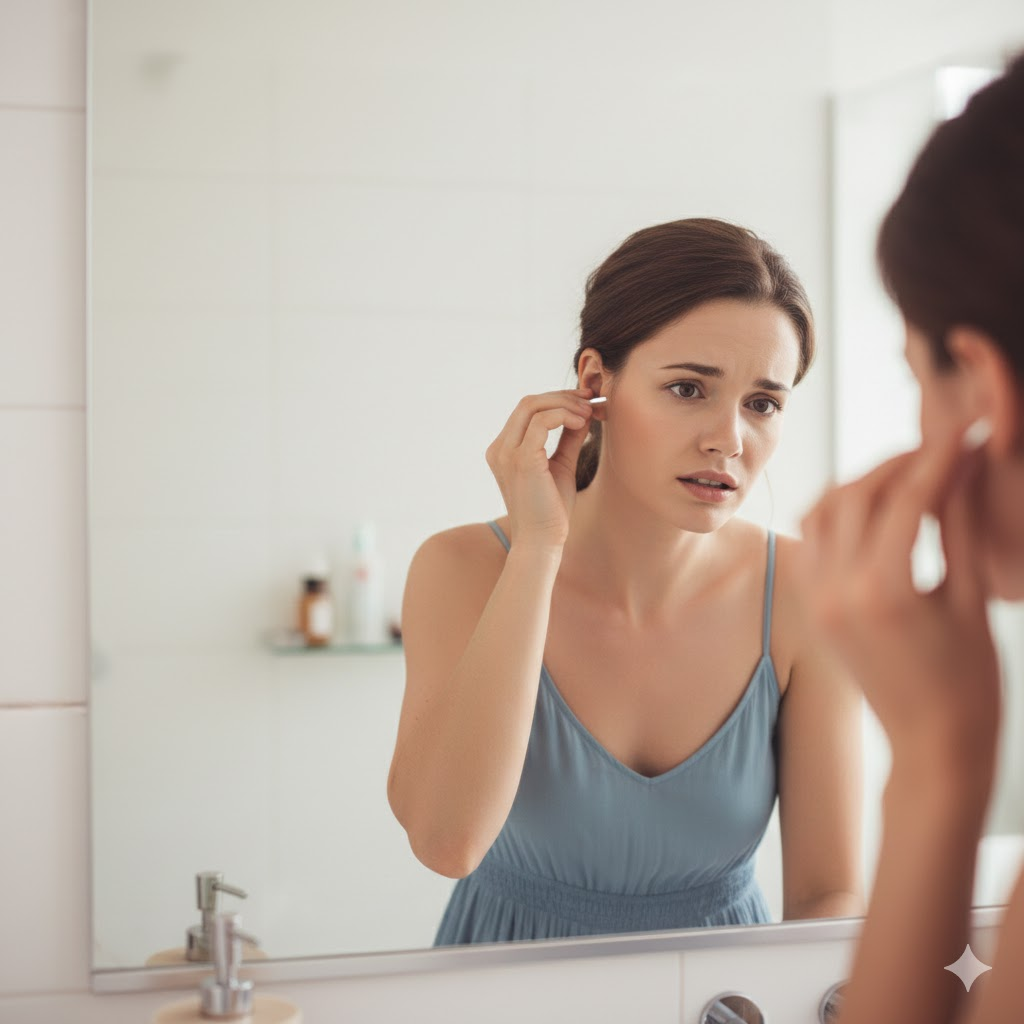
It is not advisable to clean your ears with cotton swabs or other home remedies, such as olive oil or warm water. Earwax should only be removed when it is excessive and causes symptoms like tinnitus, hearing loss, or a feeling of a clogged ear — and the cleaning should always be performed by an ENT specialist.
Homemade “earwax removal” recipes are very common on the internet, and even reputable media outlets often promote this type of practice — which is not recommended by otolaryngologists.
In reality, cleaning the ear canal is only necessary in very specific situations. Contrary to what many people believe, earwax is an ally to ear health, and attempting to remove it at home can cause several problems.
In this article, I explain this issue in more detail. Let’s get started?
- How to remove earwax?
- Do you need to clean your ears from time to time?
- What are the risks of removing earwax at home?
- What can cause earwax buildup?
- When should earwax be removed?
How to remove earwax?
The most accurate and safest answer to this question is: never remove earwax at home — always seek medical evaluation from an ENT specialist.
You can carefully clean the outer ear — the auricle — using your finger wrapped in a dry towel after showering (when the sensation of moisture may be stronger). You may insert only the very tip of the towel at the entrance of the ear canal.
However, you should never insert any object into your ear to clean it, including cotton swabs, sticks, pen caps, or liquids that claim to “soften earwax so it can be removed.”
Do you need to clean your ears from time to time?
In most cases, active ear cleaning is not necessary because earwax is essential for protecting and maintaining ear health.
Produced by the ceruminous glands of the external auditory canal, earwax is mainly composed of fatty acids and shed skin cells.
Its slightly sticky texture and mildly acidic pH create an environment that discourages microorganism growth. For this reason, earwax acts as a natural barrier against water, foreign particles, and potentially harmful pathogens.
Earwax production is a continuous and normally balanced process, aided by the natural outward migration of skin cells lining the ear canal — and for the vast majority of people, this self-cleaning mechanism is enough to keep the ears healthy.
Earwax buildup should only be considered a problem when it causes discomfort or symptoms like tinnitus and a feeling of clogged ears. In such cases, you should see an ENT specialist for professional ear irrigation. In the office — never at home.
What are the risks of removing earwax at home?
Removing earwax using home methods such as drops of olive oil and warm water, combined with objects like cotton swabs or cloths, is not only ineffective but can cause serious ear health risks, including:
- Pushing earwax deeper: Earwax is produced in the outer ear canal and should remain there — far from the eardrum. Inserting cotton swabs or any object may push wax deeper where it shouldn’t be, increasing complications.
- Skin injuries: Improper manipulation can scratch or injure the delicate skin of the ear canal, increasing the risk of infection.
- Worsening of symptoms: Substances like oils or warm water may actually aggravate tinnitus or the sensation of a clogged ear.
- Infections: Any object or liquid introduced into the ears can alter the canal’s natural environment, favoring infection.
- Ineffective cleaning: Home methods do not remove earwax as promised — they typically make symptoms worse and hinder proper cleaning performed by a specialist.
- Risk of eardrum damage: Impacted wax or contamination of the inner ear can cause eardrum injuries, leading to more severe or even permanent hearing loss.
What can cause earwax buildup?
Earwax may be produced at a faster rate due to specific conditions (including genetic predisposition) that affect a small portion of the population. In these cases, periodic professional ear cleaning may be necessary.
However, earwax buildup may also be related to dermatological conditions such as seborrheic dermatitis or psoriasis.
When should earwax be removed?
As mentioned, removal is only recommended when there is significant discomfort or when buildup causes symptoms like hearing loss, a clogged ear sensation, or tinnitus.
All cases must be evaluated by an ENT specialist, the professional trained to perform the procedure safely and effectively.
Ear irrigation follows a careful protocol, starting with a thorough assessment of symptoms and an exam of the ear canal using an otoscope — not only to identify wax buildup but also to detect possible lesions or other conditions.
Do not remove earwax at home!