
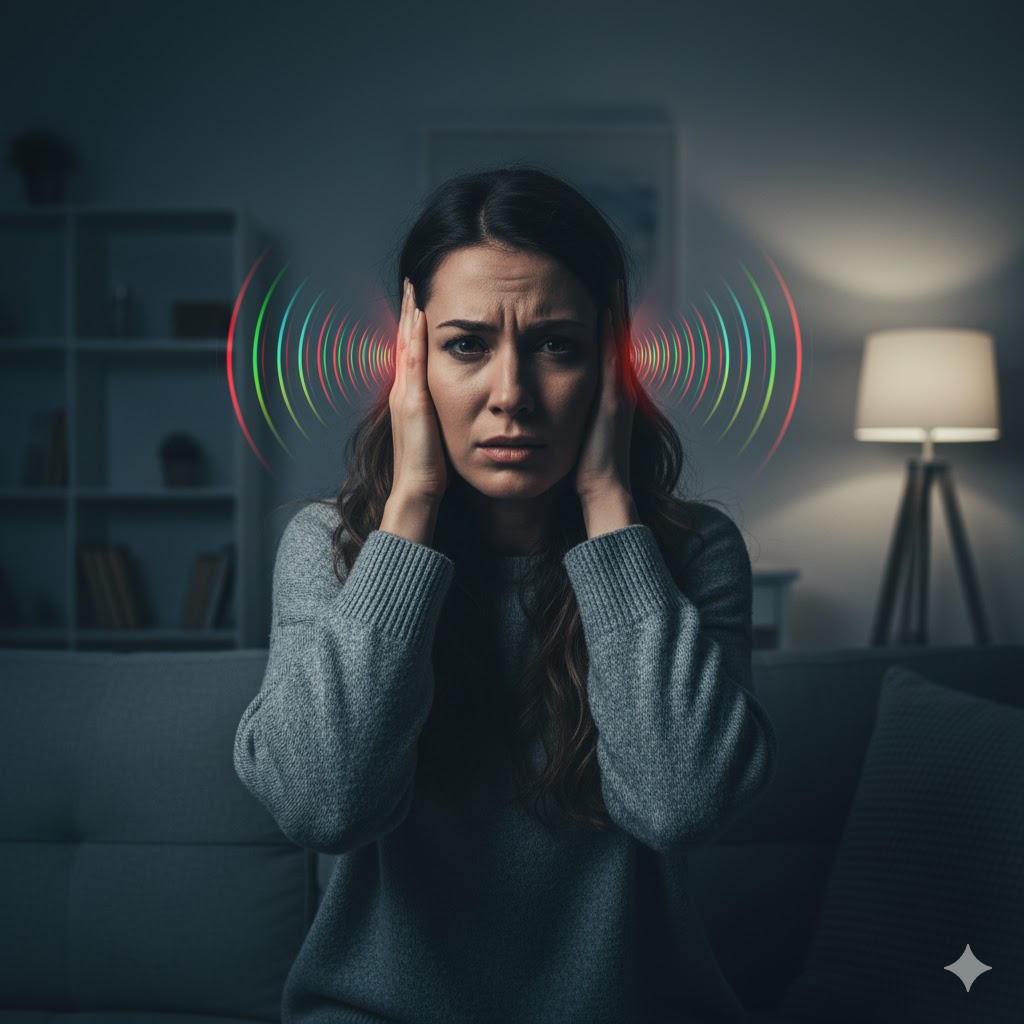
Does tinnitus have a cure? Will tinnitus lead to deafness? Is it always a sign of hearing loss? Can Ginkgo biloba treat tinnitus? Find the answers to these and other common questions — and learn what’s fact and what’s myth when it comes to ringing in the ears.
Tinnitus is a common, yet poorly understood symptom. It’s also very subjective, which opens room for speculation — and misinformation.
In this article, I’ll clarify frequently asked questions often searched online and share important guidance for anyone dealing with tinnitus or who knows someone experiencing it.
Let’s uncover the truths and myths about tinnitus. Check it out!
1. Tinnitus is a disease
Myth. While it is often perceived as a disease, tinnitus is actually a symptom linked to many different underlying conditions.
It can be associated with earwax buildup, infections, hearing loss, metabolic disorders, injuries, and many other causes.
2. Tinnitus has no cure
It depends. Whether tinnitus can be cured depends on its underlying cause.
In cases involving impacted earwax, medications with tinnitus as a side effect, or muscular issues, symptoms may completely disappear once the triggering factor is treated.
Chronic cases — typically related to hearing loss or inner ear damage after infection or noise exposure — can be managed with several therapeutic strategies.
Hearing aids and sound therapy are common approaches, as well as cognitive behavioral therapy (CBT) and relaxation techniques. These help reduce tinnitus perception, manage anxiety, and improve quality of life.
3. People with tinnitus have hearing loss
It depends. Hearing loss is frequently associated with tinnitus — but not everyone with tinnitus has hearing loss, and not every hearing loss results in tinnitus.
Age-related or noise-induced hearing loss are major causes, but tinnitus can also stem from wax buildup, glucose metabolism disorders, and musculoskeletal conditions such as temporomandibular disorders.
4. There’s no medication for tinnitus
Fact. Currently, there is no drug specifically approved to treat tinnitus on its own.
However, depending on the cause, certain medications may be used alongside other treatments to help manage symptoms.
5. Ginkgo biloba treats tinnitus
It depends. Ginkgo biloba is often cited as a treatment option, but scientific evidence is inconsistent. Studies show modest or no significant benefits — although some patients report subjective improvement.
Even though it’s plant-based, medical supervision is important because Ginkgo biloba can cause side effects like headaches, gastrointestinal discomfort, or allergic reactions, and may interact with anticoagulants and blood pressure medications.
6. Tinnitus is just an auditory illusion, so only the patient hears it
Myth. Many people think tinnitus is “imagined” because there’s no external sound source (except in cases of objective tinnitus).
But tinnitus is a real auditory perception — just like any other sound. It may resemble ringing, buzzing, hissing, or even heartbeat-like pulses.
7. Dental issues can cause tinnitus
True. Dental issues — especially Temporomandibular Disorders (TMD), whether muscular or involving the TMJ — are recognized triggers for tinnitus in many patients.
The TMJ sits close to the middle ear and shares neural pathways (especially through the trigeminal nerve). Problems like malocclusion, inflammation, and bruxism (teeth grinding) can contribute to tinnitus.
8. The right specialist is an ENT doctor
True. An otorhinolaryngologist (ENT doctor) is the most qualified specialist to diagnose and treat tinnitus.
For deeper investigation, an otoneurologist — an ENT focused on tinnitus and vertigo — is recommended.
In many cases, tinnitus treatment is multidisciplinary, especially when linked to emotional, neurological, or muscular factors.