
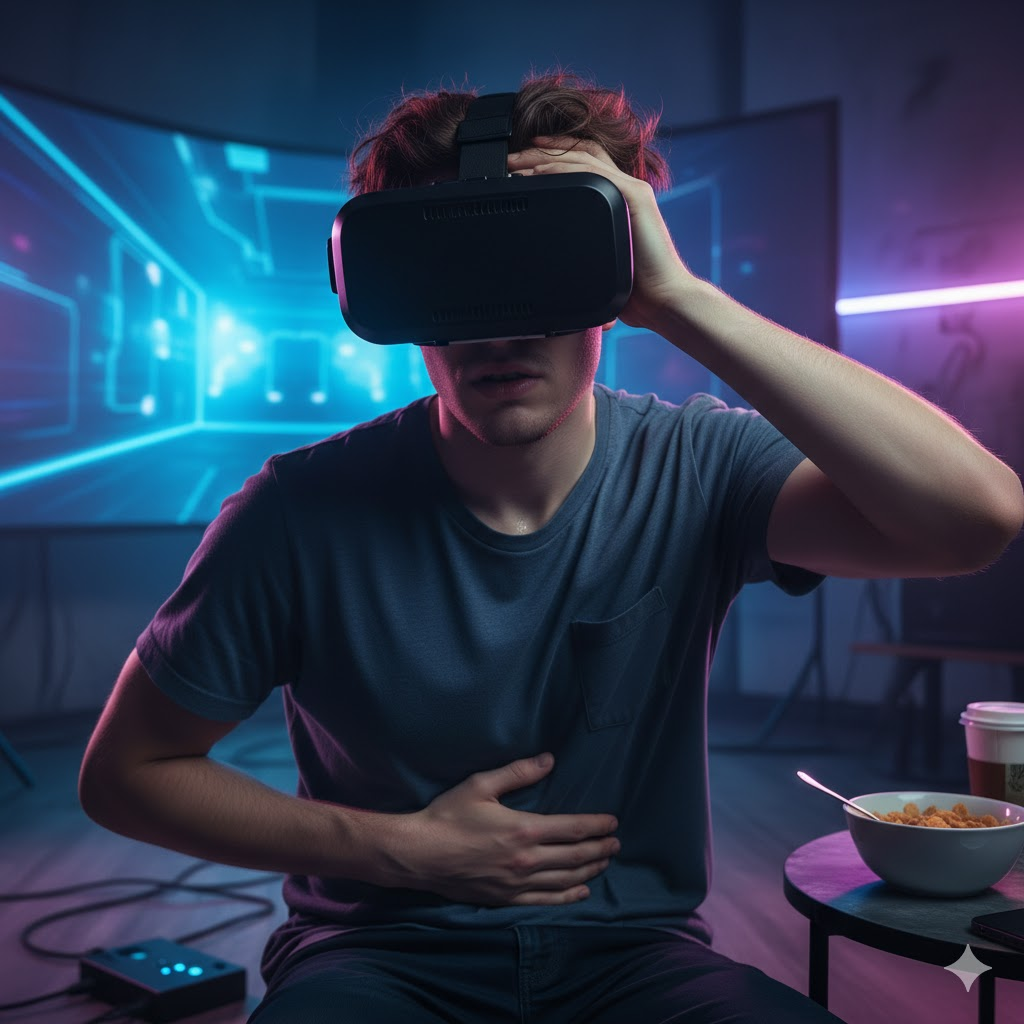
Excessive use of smartphones, computers, and virtual reality devices has been associated with symptoms like dizziness and nausea — mainly caused by screen light and motion. These symptoms, known as cybersickness, can persist even after using these technologies and may also help reveal pre-existing conditions such as vestibular migraine.
Have you ever stopped to think about how new technologies might be related to dizziness? With the massive increase in digital device use worldwide, doctors, researchers, and society are observing new and concerning patterns related to balance and wellbeing.
There are countless reports of people experiencing nausea, dizziness, and headaches after long periods of smartphone use. These complaints become even more intense when apps include animated elements — especially immersive experiences like virtual reality headsets.
However, not everyone who uses these devices will develop symptoms — and even when symptoms occur, screens aren’t always the real cause. Many factors are involved, and we must analyze this phenomenon carefully to avoid misleading assumptions.
In this article, I’ll share insights into how technology may affect your health — and offer tips to minimize discomfort while using digital devices. Keep reading!
- What is the relationship between new technology and dizziness?
- What is cybersickness?
- How to prevent dizziness while using technology daily?
- Is technology really the cause of dizziness?
What is the relationship between new technology and dizziness?
Technologies involving frequent and prolonged screen exposure — smartphones, computers, augmented reality, and virtual reality devices — have been linked to dizziness, nausea, and headaches due to the brightness and motion of digital images.
The bright light can strain the eyes, while screen motion challenges balance and causes disorientation — effects processed by the vestibulo-ocular system, responsible for stabilizing vision and coordinating head and eye movements.
In VR devices, for example, users see realistic 3D environments and movement — but the body remains still. This sensory mismatch can confuse the brain and trigger dizziness and nausea similar to motion sickness.
Additionally, prolonged screen use can disrupt sleep, increase stress, and cause muscle tension — all factors that contribute to what we now call cybersickness.
What is cybersickness?
Cybersickness, or virtual motion sickness, describes a set of symptoms similar to motion sickness that occur during or after exposure to virtual environments — such as VR games, simulators, and other immersive experiences.
Symptoms include:
- nausea;
- drowsiness;
- stomach discomfort;
- headaches;
- disorientation.
Cybersickness may continue even after the device is removed, leaving users unstable or dizzy for minutes — or hours.
The term was originally used in the military — especially aviation — when flight simulator trainees experienced motion sickness–like reactions despite being carefully selected for lower sensitivity.
As VR and mobile devices expanded into everyday life, cybersickness became common among regular users — who are often more vulnerable, with no training to manage these effects.
Prolonged screen time may also cause:
- eye strain;
- headaches;
- eye irritation;
- difficulty concentrating.
And importantly: not all dizziness from screens is cybersickness.
It may indicate underlying vestibular disorders, such as vestibular migraine or visual vertigo, which can exist independently of technology use.
How to prevent dizziness while using technology daily?
The first step is to monitor and reduce screen time when possible — and diversify activities with off-screen moments.
Other useful strategies:
- set daily screen-time limits;
- use accessibility settings like brightness control and blue-light filters;
- take regular breaks — especially for those who work in front of screens;
- stretch your body and relax your eyes during breaks;
- maintain proper ergonomic posture to relieve muscle strain.
These measures help prevent sensory overload, visual fatigue, and headaches related to screen exposure.
Is technology really the cause of dizziness?
Cybersickness is not very common in the general population, being more frequent among users of VR and AR devices.
Therefore, dizziness should always prompt investigation for other possible causes — especially if symptoms are recurring.
A prime example is vestibular migraine, a neurological condition featuring vertigo and imbalance with or without headache. Attacks may include:
- nausea;
- sensitivity to movement, light, and sound;
- pulsating headache (often one-sided);
- blurred vision.
Diagnosis is clinical, based on symptom history and ruling out other vestibular disorders. Treatment involves symptom-relief medication and lifestyle changes.