
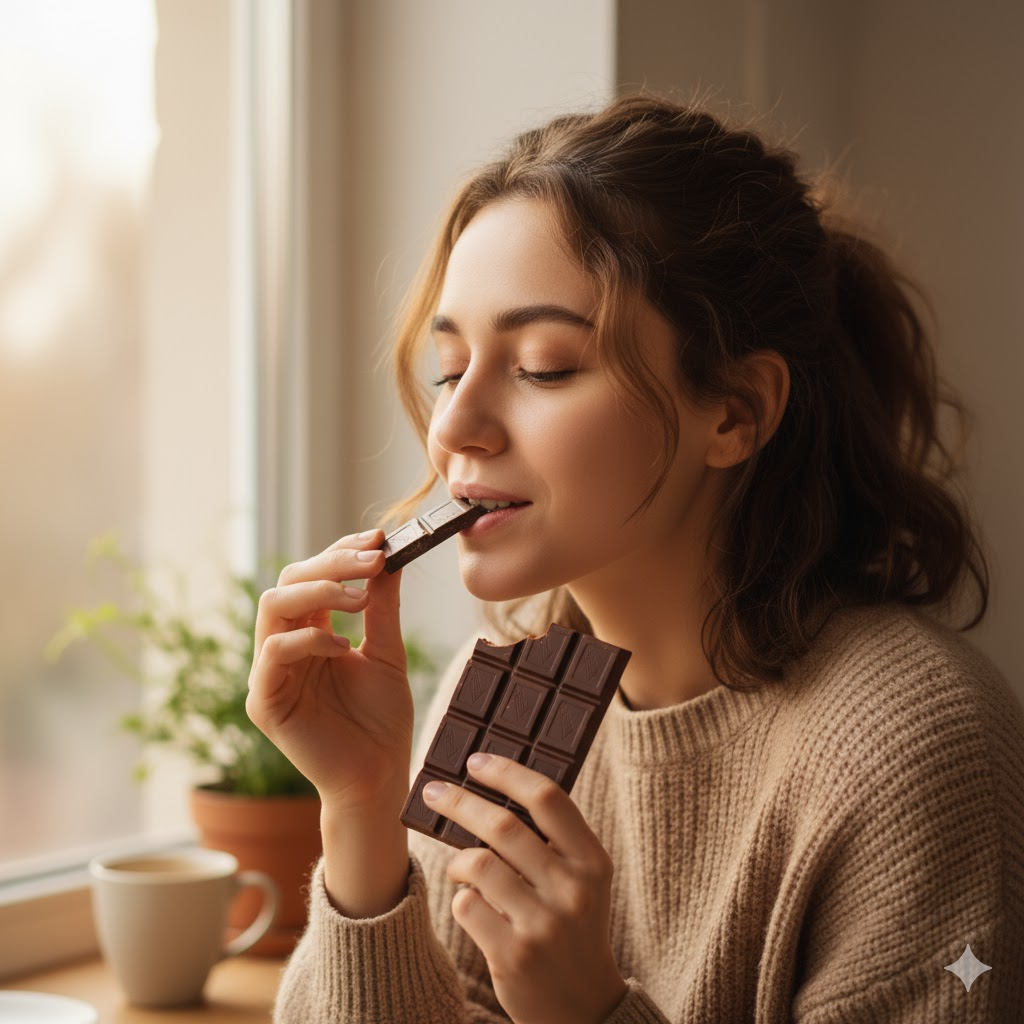
Eating too much chocolate can worsen tinnitus in people who already experience the symptom — mainly due to the caffeine and sugar often found in chocolate products. Balanced consumption and healthier alternatives can help prevent discomfort.
Chocolate is one of the most popular foods in the world. Whether used in desserts or eaten on its own, it is widely associated with pleasure and indulgence — and is a familiar companion during stressful moments or PMS.
However, chocolate also has a reputation for side effects such as weight gain and acne. Many people additionally report a noticeable increase in tinnitus — defined as the perception of noise in the absence of an external sound source.
Tinnitus has several causes, from simple issues like impacted earwax to disorders in the middle or inner ear. In most cases, excessive intake of certain substances can indeed intensify symptoms.
But why exactly does chocolate make tinnitus worse? In this article, you will understand how the inner ear works and why chocolate — and other foods — can aggravate tinnitus in some patients. Keep reading to learn more!
- Does chocolate cause tinnitus?
- Why do sugar and caffeine worsen tinnitus?
- Can people with tinnitus eat chocolate?
- How to prevent tinnitus — without giving up chocolate?
Does chocolate cause tinnitus?
Chocolate alone does not directly cause tinnitus. However, components found in chocolate can aggravate the condition.
The key culprits: caffeine and sugar
Most chocolate products today are not just made from cocoa — which already contains high levels of caffeine — but also contain large amounts of added sugar, now often highlighted in nutritional labels.
To understand how this affects tinnitus, we must consider how the auditory system works.
When a sound is produced, the external ear captures the sound waves and directs them to the eardrum — a diaphragm-like membrane that vibrates according to each acoustic stimulus.
These vibrations are transmitted to the ossicles (malleus, incus, and stapes), which move the fluid inside the inner ear (perilymph).
This fluid movement activates the basilar membrane in the cochlea, where the organ of Corti converts mechanical energy into electrical signals. These signals travel through the auditory nerve to the brain, where sound and balance information is processed.
Even when there is no external sound source, the inner ear maintains an electrochemical potential generated by the stria vascularis — which requires a constant supply of energy, mainly from glucose.
Because of this high metabolic demand, the inner ear is very sensitive to fluctuations in blood sugar and oxygen levels.
Why do sugar and caffeine worsen tinnitus?
Sugar serves as a quick source of energy, but excessive consumption may cause several health issues:
- weight gain;
- blood sugar spikes;
- increased cravings for sweets;
- risk of diabetes and metabolic imbalance.
Blood sugar spikes trigger insulin release. Chronic insulin elevation can alter how the inner ear functions, potentially causing:
- ear fullness;
- mild hearing reduction;
- dizziness.
Caffeine, when consumed excessively, may lead to:
- nervousness;
- tremors;
- anxiety;
- palpitations.
Tinnitus often involves overactive auditory pathways in the brain. Therefore:
Too much caffeine can overstimulate these already dysregulated areas, worsening tinnitus.
Can people with tinnitus eat chocolate?
In general, excessive intake of sugary foods is not recommended — especially for individuals with tinnitus.
But that doesn’t mean you must eliminate chocolate completely.
The recommendation is:
- consume chocolate in moderation;
- prefer small amounts and less frequently.
Coffee and other caffeine-rich foods should also be limited — but not necessarily eliminated.
A practical guideline: 2–3 cups of coffee per day is usually acceptable for most tinnitus patients.
How to prevent tinnitus — without giving up chocolate?
There are smart ways to enjoy chocolate more safely:
- pair chocolate with fruit-based desserts (more fruit than chocolate);
- choose products with higher cocoa content and less sugar and fat;
- experiment with healthier swaps such as carob, a naturally sweet, low-fat, caffeine-free alternative with a flavor similar to cocoa.